Quick answers to common questions on diesel generators, electric generators, servicing, ATS systems and key generator terminology.
Welcome to our Frequently Asked Questions page where we answer all of your questions on Diesel Generators, Electric Generators and a vast array of other well-used industry terms and topics.
We also have a detailed Knowledge Centre to further enhance your understanding, along with a wide range of products available on our Used Generators and New Generators pages.
Regularly checking your generator is crucial to prevent breakdowns. Here are some simple observations to help keep your generator running smoothly:
1. Check fuel levels: Running out of fuel not only causes a breakdown but can also lead to the engine sucking in dirt from the bottom of the tank, resulting in a filter blockage.
2. Ensure coolant and oil levels are correct: Top up if necessary.
3. Visually inspect the engine: Check for any cracking hoses and fuel/coolant leaks.
4. Check your batteries: Winter conditions and regular starting can cause batteries to deteriorate. It’s a good idea to test their charge to ensure they’re still in good condition. Battery chargers should be connected when a generator isn’t running for an extended period.
5. If your generator is used as a standby application, schedule a weekly run: This will help identify any potential problems.
Freeman Energy can undertake a comprehensive 75-point service inspection on your generator to ensure it’s ready to run. Please call us for more information.
A common misconception is that diesel generators are dirty, environmentally unfriendly, and expensive to run. However, thanks to the invention of red diesel and advancing technologies, diesel generators can now run extremely efficiently and be a very cost-effective option.
Diesel generators are the most reliable backup power source currently available for extended running periods. They can start up in seconds, providing a steady stream of power continuously. Freeman Energy offers generators to suit a wide range of budgets.
Generators are rated by KVA, this indicates how much power the generator can produce. Mechanical engines are rated in kW or horsepower.
KVA = Kilo Volt Ampere.
1 KVA = 1000 Volt Amperes (VA). A VA is the voltage times the current feeding an electrical load.
1 KVA = 0.8 kW (electrical) at 0.8 power factor.
If you are unsure of what power requirement you need Freeman Energy offer a simple guide to sizing. Additionally we have a more in-depth guide to KVA - Click here to view.
A load bank is a portable device that simulates the load on a generator. It tests the generator’s performance at various stages including 20%, 50% and up to 100% load. This ensures the generator can meet its demands when needed. Standby generators benefit particularly from this as it allows faults to be spotted and fixed before an emergency occurs.
Freeman Energy offers a full load bank test as part of our service contracts. However, we can also conduct a full load bank test at your site on a one-off basis, upon request.
Additionally, all of our used generators undergo a full load bank test, providing peace of mind that they can produce their rated power.
Single phase:
Consists of 3 cables: live, neutral and earth. Typically the voltage is 220–240V. Domestic houses have single phase supplies.
Current flows through the live wire and returns via neutral to complete the circuit.
Three phase:
Consists of 5 cables: 3 live (L1, L2 & L3), a neutral and an earth. Typical voltages are 400–415V between the live cables (e.g. L1–L2) and 200–240V between live and neutral (often written 415/240V).
For more information please take a look at our guide on differences between single and three phase, and our guide on Generator Sizing and Installation.
Yes — we collaborate closely with a finance company offering competitive packages, and we also welcome customers who choose their own finance provider. Please call our office on 01664 500699 for more information.

An Automatic Transfer System (ATS) is used alongside standby generators to automatically start them. When the mains is healthy, it provides power to a building. If the mains fails, the ATS senses the failure, starts the generator and transfers power once it is safe to do so.
Freeman Energy has a helpful guide that details how and what an ATS is. You can view it here.
Generators are connected to the building’s earthing system, but an additional earth rod helps ensure that any fault current has a direct, low-resistance path to ground. This reduces the risk of exposed metalwork becoming live during certain fault conditions.
If you have any questions about your installation, please contact us and we’ll be happy to advise.
kWe = kilowatt electrical. On many generator specs, kWe is commonly shown as kVA × 0.8 (at 0.8 power factor).
Most engine manufacturers recommend service intervals between 200 and 500 hours for oil and filters. Some new sets require an initial service after the first 50 hours.
For standby generators, we recommend two service visits per year, alongside weekly checks: typically a minor and a major service.
A minor service includes visual checks while stationary and running, and topping up levels where required. A major service can include oil, filter and coolant changes depending on condition/hours.
The first step is assessing what you need the generator for.
Petrol generators are often better for small, infrequent loads (caravans, market stalls, small tools).
Diesel generators are typically preferred for higher or longer running loads. Diesel engines often offer improved longevity, lower running costs at scale, and better suitability for standby/continuous applications.
Freeman Energy supplies new and used diesel generators from 10 kVA to 2900 kVA.
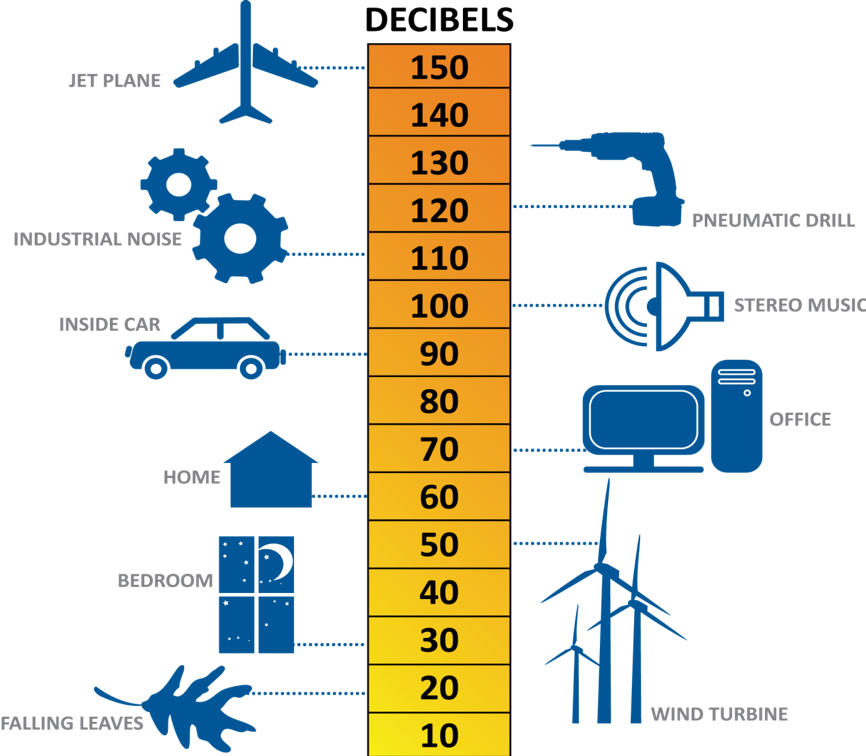
Noise is often a key factor when choosing a generator.
“Silent” sets usually mean an acoustic canopy (not zero noise). “Open skid” sets have no sound attenuation and will be much louder. Manufacturers normally quote noise as a dB(A) level at a set distance (e.g., 77 dB(A) @ 1 metre).
Synchronising allows multiple generators (or a generator and the grid) to run together by matching voltage, frequency and phase so power can be shared safely.
Base load is the constant portion of a site’s demand, or the steady output a generator supplies (including when operating in parallel with the grid).